Source Hydraulic Crimping Tool for Power Cables, Construction, and Wire
Explore 30 hydraulic crimping tool options from verified suppliers. Compare specifications like crimping range, force, and models such as HHY-400U for power cable and wire applications in construction projects; compare the available evidence and request quotations based on your requirements.
Key considerations
Products List




Comprehensive Sourcing Guide
Hydraulic Crimping Tool Sourcing Guide
The hydraulic crimping tool market features a diverse range of equipment designed for power cable and wire applications, with specific models like the HHYD-400U and HHY-400B offering distinct capabilities. Buyers must distinguish between manual and semi-automatic grades, as the observed listings include both manual crimping pliers and semi-automatic units that assure rapid piston advance for improved efficiency. Understanding these operational differences is critical for selecting the right tool for construction projects or industrial maintenance tasks where portability and speed are paramount.
Procurement decisions should also account for the specific crimping range required, as observed data indicates capacities spanning from 16mm² up to 400mm² depending on the model. Some units are optimized for hexagonal type crimping within a 16-150mm² range, while others support larger cross-sections up to 400mm². Sourcing professionals must verify that the selected tool matches the exact wire gauge requirements of their project to ensure a secure connection without damaging the conductor or the die set during the crimping process.
Product Scope and Observed Listing Signals
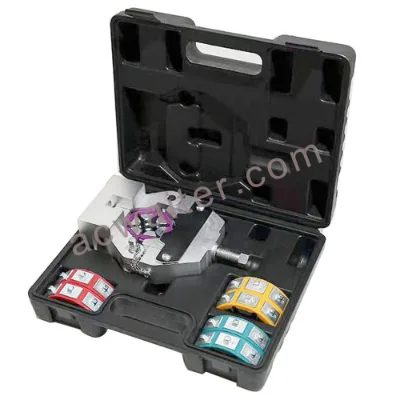
Listing signals reveal that hydraulic crimping tools are frequently categorized by their specific model numbers, such as the HHY-240A or HFJT-1632, which often dictate the maximum stroke and output tonnage. The observed product range includes tools with a 12-ton output capacity and others rated at 6 tons, indicating that buyers must carefully match the force requirements to the conductor size. Packaging varies significantly, with some units supplied in plastic boxes while others come in plastic carrying cases or cartons, which affects logistics planning and on-site storage.
Buyers should also note the variation in stroke lengths, with observed specifications ranging from 18mm to 45mm, which directly impacts the speed and efficiency of the crimping operation. The presence of standard dies sets, such as the 8-set configuration covering sizes from 16mm² to 150mm², suggests that many tools are sold as complete kits ready for immediate deployment. However, the availability of customization options implies that specialized requirements may need to be negotiated directly with the supplier rather than relying on standard off-the-shelf configurations.
Technical Specifications to Verify
Technical verification must begin with the crimping force and stroke capacity, as these parameters determine the tool's ability to handle specific conductor sizes without failure. Observed listings show a 12-ton output for heavy-duty models and a 6-ton capacity for lighter applications, requiring buyers to confirm that the selected unit can generate sufficient pressure for the intended wire gauge. The maximum stroke length, observed between 18mm and 45mm, is another critical metric that influences the cycle time and the physical space required for the tool's operation during use.
Dimensional and weight specifications are equally important for portability and handling, with observed units weighing between 4.0kg and 8.2kg and measuring up to 580mm in length. Buyers should verify the physical dimensions, such as the 550250140mm footprint of certain models, to ensure the tool fits within the available workspace or transport vehicle. Additionally, the automatic grade, whether manual or semi-automatic, dictates the level of operator effort required, with semi-automatic features like rapid piston advance offering significant efficiency gains for high-volume production environments.
Compliance and Safety Documentation
Compliance verification is essential, as observed listings indicate that many hydraulic crimping tools carry CE certification, which is a mandatory requirement for selling products within the European market. Buyers must request valid certification documents to confirm that the specific model meets the relevant safety standards for electrical and mechanical equipment. While some listings mention ISO9001:2008, it is crucial to verify that the supplier holds current and valid quality management system certifications rather than relying on outdated or generic claims found in product descriptions.
Safety documentation should also include detailed user manuals and maintenance guides that explain the proper operation of the hydraulic system and the correct usage of the dies. The presence of standard dies sets implies that the tool is designed for specific crimping geometries, and the documentation must clearly outline the compatibility between the tool and the die sets to prevent equipment damage. Ensuring that the supplier provides comprehensive safety instructions helps mitigate the risk of operator injury and ensures that the tool is used within its designed operational limits.
Cost Drivers and Commercial Terms
Cost drivers in the hydraulic crimping tool market are heavily influenced by the output tonnage, the complexity of the hydraulic system, and the inclusion of standard die sets. Models with higher output capacities, such as the 12-ton units, typically command higher prices than their 6-ton counterparts, and the inclusion of multiple die sets can significantly increase the overall unit cost. Buyers should analyze the total cost of ownership, considering that a higher initial investment in a semi-automatic tool may yield long-term savings through increased operational efficiency and reduced labor time.
Commercial terms such as the minimum order quantity (MOQ) and warranty coverage are also critical factors in the procurement decision. Observed listings show an MOQ range of 1 to 100 pieces, offering flexibility for small-scale projects or large-scale industrial deployments. Warranty periods vary, with some suppliers offering a 1-year guarantee while others provide up to 2 years, and buyers should negotiate terms that align with their risk tolerance and the expected usage intensity of the equipment.
Supplier Qualification and Quality Control
Supplier qualification requires a thorough assessment of the manufacturer's location and production capabilities, as observed data points to Zhejiang, China as a primary origin for these tools. Buyers should verify the supplier's ability to maintain consistent quality standards, particularly regarding the material grade and the precision of the hydraulic components. The presence of certifications like CE and ISO suggests a baseline level of quality control, but on-site audits or third-party inspections may be necessary to ensure that the production processes meet the buyer's specific requirements.
Quality control checks should focus on the durability of the tool's construction and the accuracy of the crimping force. Buyers must verify that the materials used, such as the steel components mentioned in some listings, meet the necessary strength and wear-resistance standards for industrial applications. Additionally, the condition of the product, whether new or refurbished, should be clearly defined in the contract to avoid disputes regarding the expected lifespan and performance of the equipment upon delivery.
Long-Term Procurement Checks
Long-term procurement success depends on establishing a reliable supply chain for spare parts and maintenance support, particularly for the standard dies and hydraulic seals. Buyers should confirm that the supplier can provide replacement parts for the specific model, such as the HHY-400 series, to ensure minimal downtime during critical operations. The availability of customization options also suggests that the supplier should be capable of adapting the tool to future project requirements, providing a strategic advantage for ongoing procurement needs.
Regular performance monitoring and maintenance scheduling are essential to extend the lifespan of the hydraulic crimping tool. Buyers should implement a system to track the usage hours and crimping cycles to predict when maintenance or part replacement will be required. Establishing a clear communication channel with the supplier for technical support and troubleshooting ensures that any issues can be resolved quickly, maintaining the efficiency and safety of the crimping operations over the long term.
FAQs
What is the crimping range for the Bowente hydraulic tool?
The Bowente hydraulic crimping tool supports a crimping range of 16 to 400 square millimeters. This wide capacity allows for versatile use across various power cable and wire sizes. The standard dies cover 16, 25, 35, 50, 70, 95, 120, and 150 square millimeters, ensuring precise hexagonal crimps for most common applications in construction and electrical work.
How much force does the HHY-400U model provide?
The HHY-400U model provides a maximum output of 12 tons of crimping force. This high capacity ensures secure connections for larger cables up to 400 square millimeters. The tool features a two-speed equipment design that assures rapid piston advance, improving efficiency during repetitive tasks while maintaining consistent pressure for reliable results.
Can I customize the hydraulic crimping tool for specific needs?
Yes, customization is available for the hydraulic crimping tool to meet specific operational requirements. Buyers can request tailored specifications beyond the standard offerings. This flexibility allows for adjustments in dies or structural components to suit unique cable types or workspace constraints, ensuring the tool integrates seamlessly into specialized industrial or construction workflows.
What certifications does the hydraulic crimping tool hold?
The hydraulic crimping tool holds CE certification, ensuring compliance with European safety and quality standards. Some models also feature ISO9001:2008 certification, indicating adherence to international quality management systems. These certifications provide assurance of product reliability and safety for professional users in global markets, facilitating smoother import processes and regulatory compliance.
What is the warranty period for the Bowente hydraulic tool?
The Bowente hydraulic crimping tool comes with a one-year warranty. This coverage protects buyers against manufacturing defects and ensures product reliability during initial use. The warranty reflects the manufacturer's confidence in the tool's durability and performance, providing peace of mind for professional users who depend on consistent equipment functionality in demanding construction environments.
How heavy is the HHY-150 hydraulic crimping tool?
The HHY-150 hydraulic crimping tool weighs 4.0 kilograms, making it highly portable. Its compact design facilitates easy handling and transport to various job sites. Despite its lightweight nature, the tool maintains robust performance with a 6-ton crimping force, balancing efficiency and ease of use for electricians and construction workers requiring mobile solutions.
What is the maximum stroke length for the hydraulic tool?
The hydraulic crimping tool features a maximum stroke of 18 millimeters. This stroke length allows for deep and secure crimping of larger cable terminals. Combined with the rapid piston advance, the stroke ensures efficient operation without compromising the quality of the connection, making it suitable for high-volume crimping tasks in industrial settings.